Ray began doing stand-up in 1978; Doug followed in 1979.
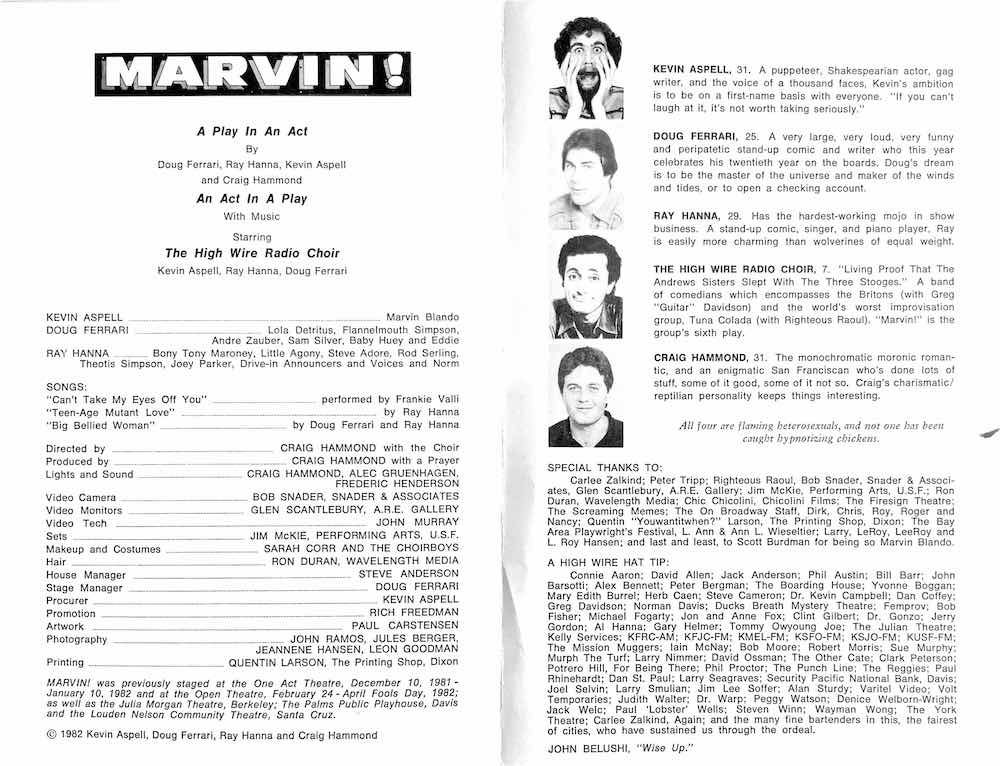
Success at this cut back their High Wire activity, as did MARVIN!,
a play they wrote and staged variously over six months
at the One Act, the Open Theater, the On Broadway and other houses.
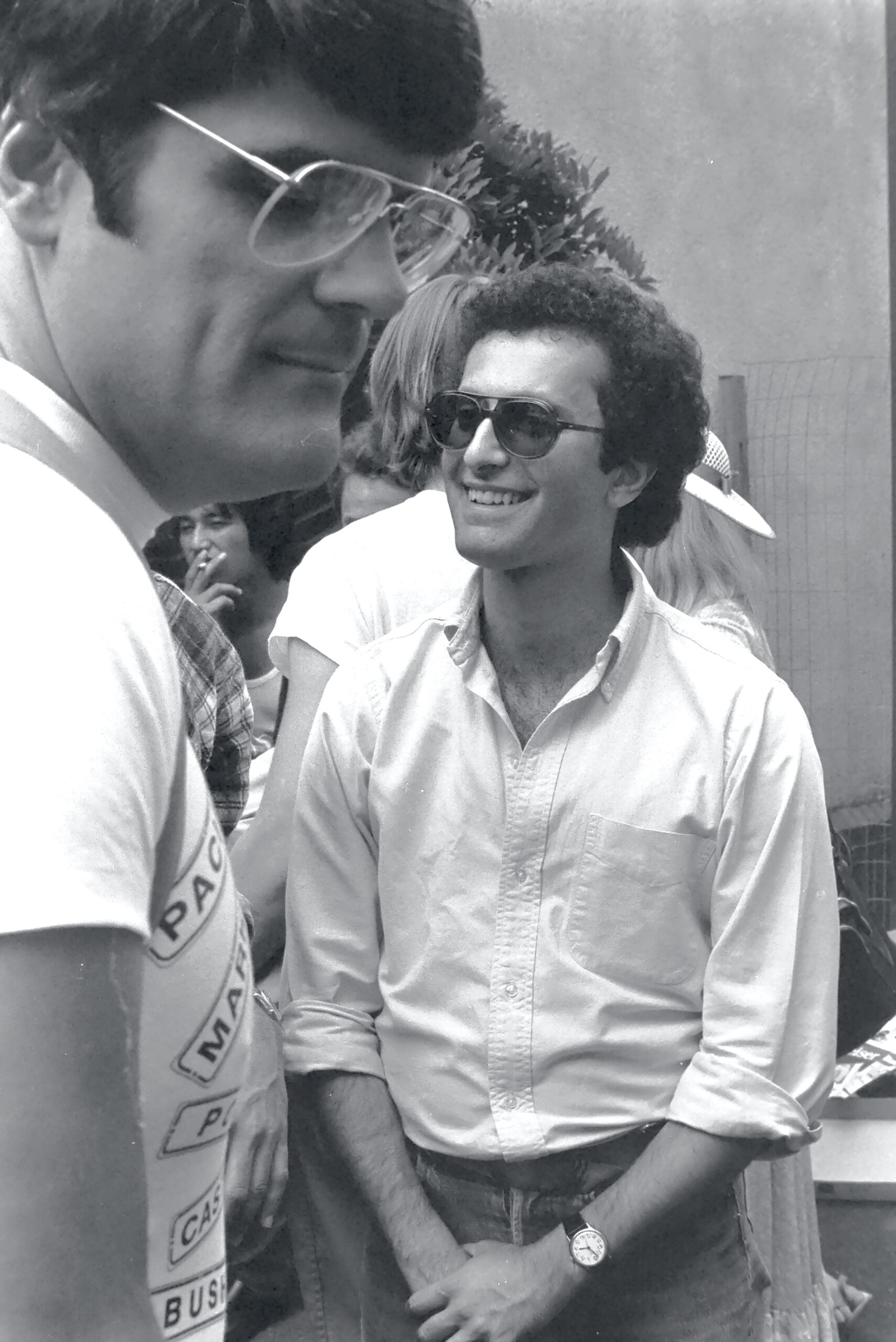
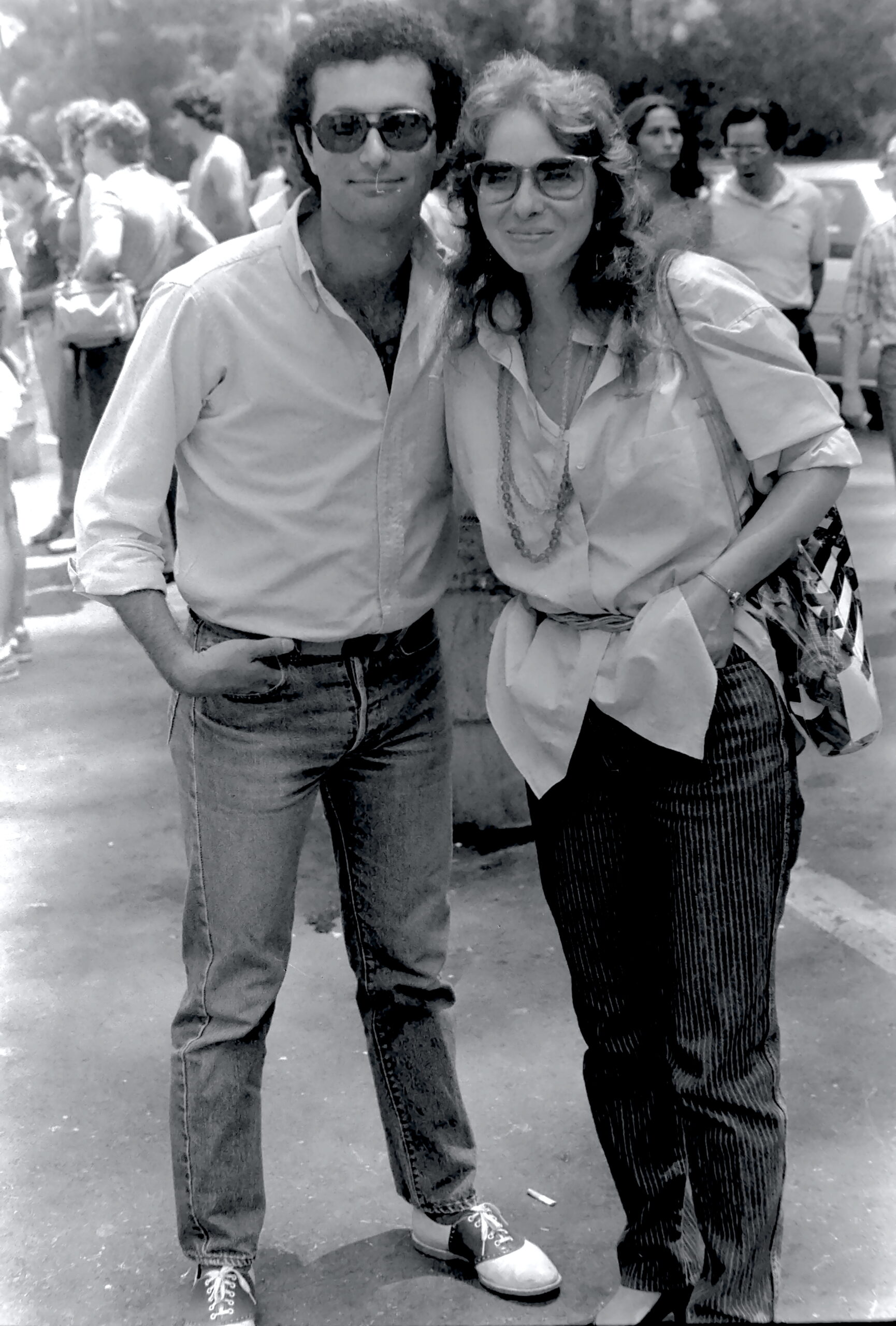
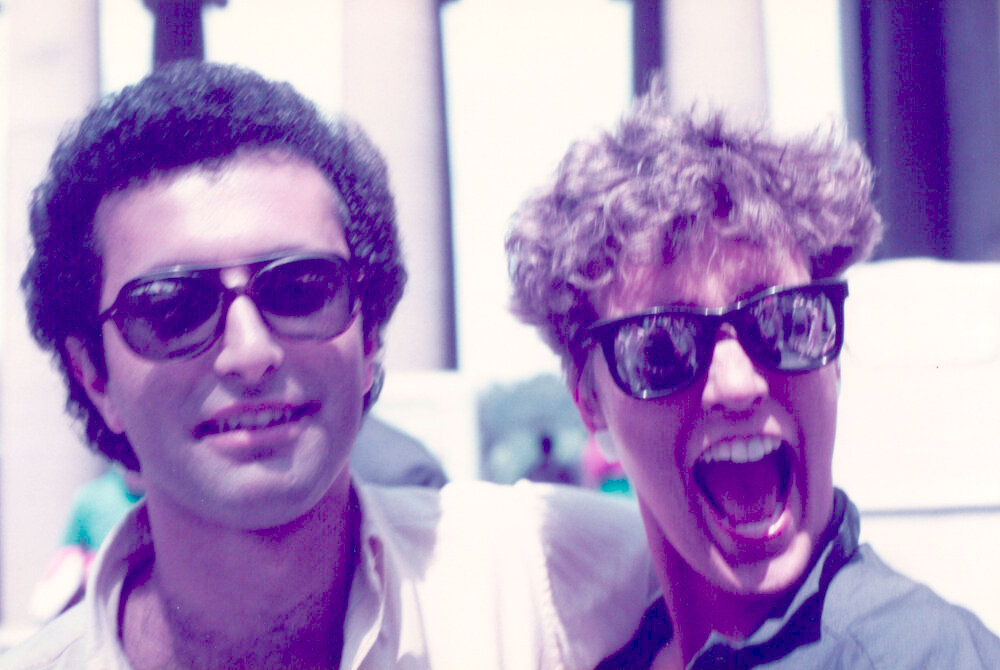
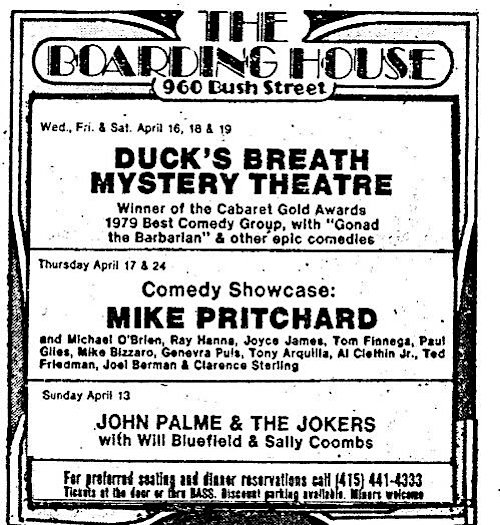
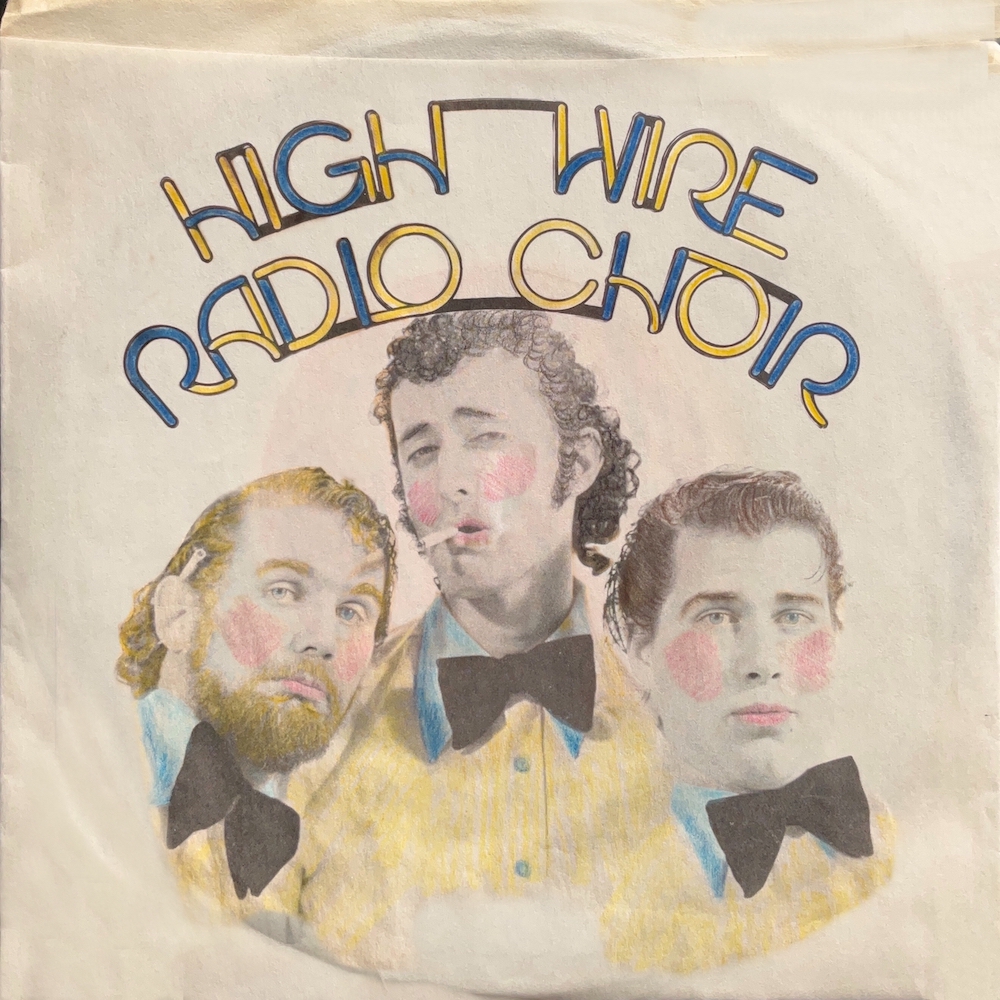
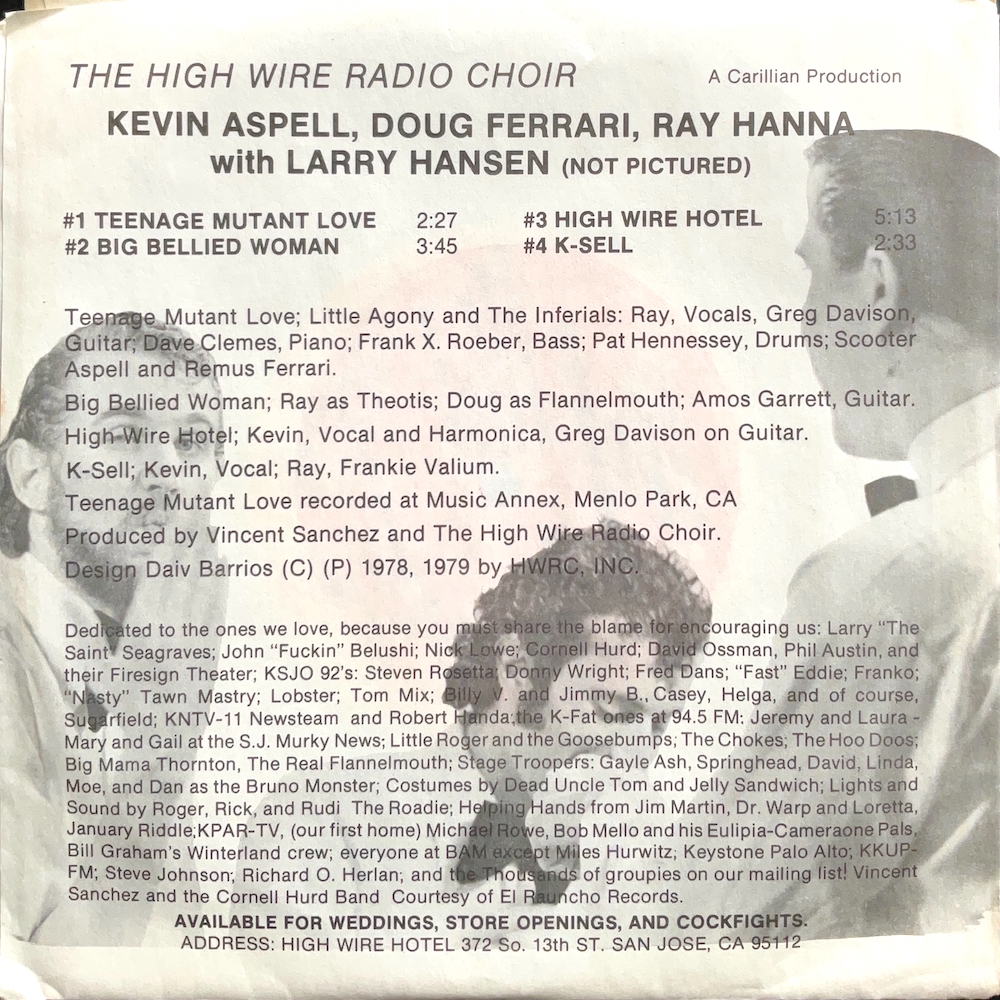
The EP
Our self-produced EP from 1978 with 4 selections, including my song "Teenage Mutant Love,", which we later featured in the one-act play MARVIN! Dr. Demento liked "Big Bellied Woman" and gave us our first nation-wide exposure on his syndicated Sunday night radio show.
Guys from Space
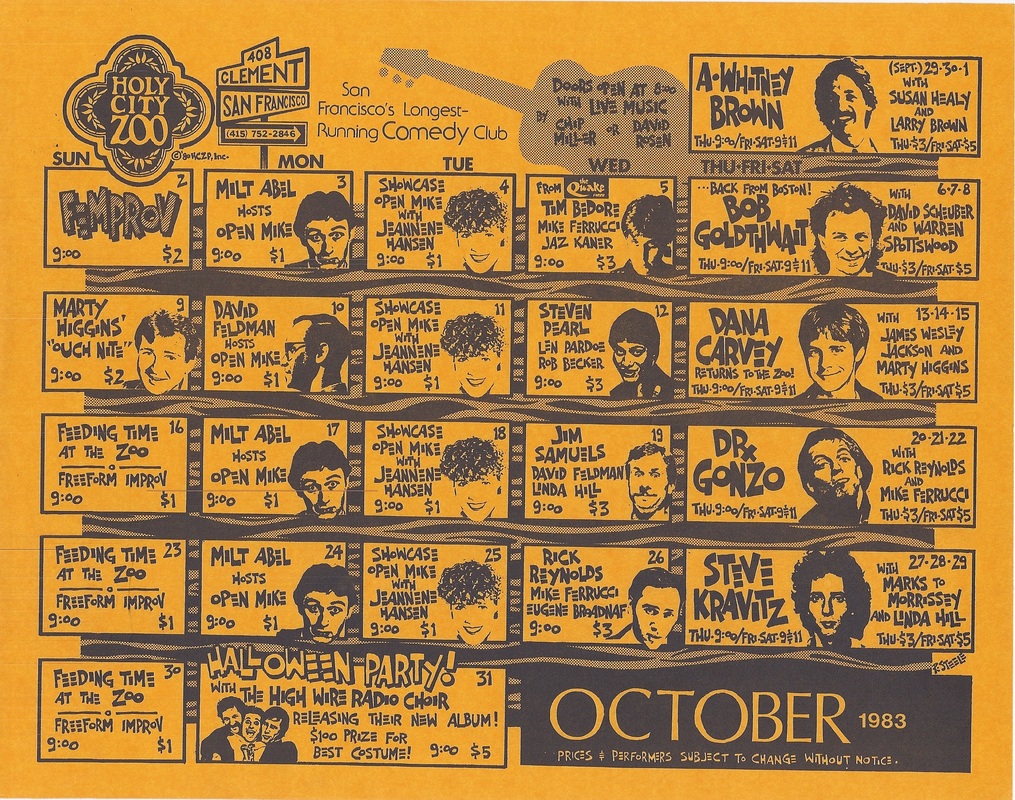
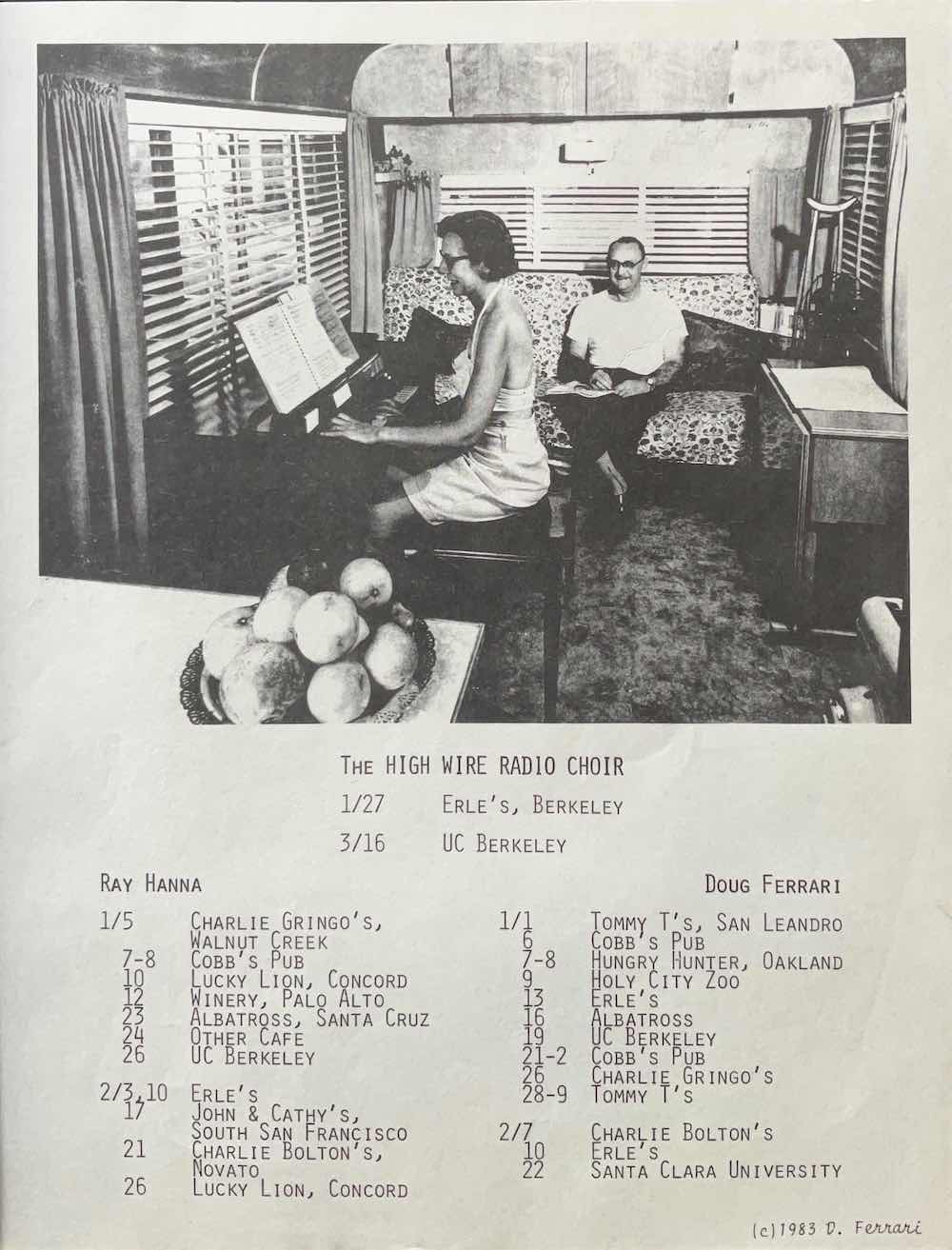
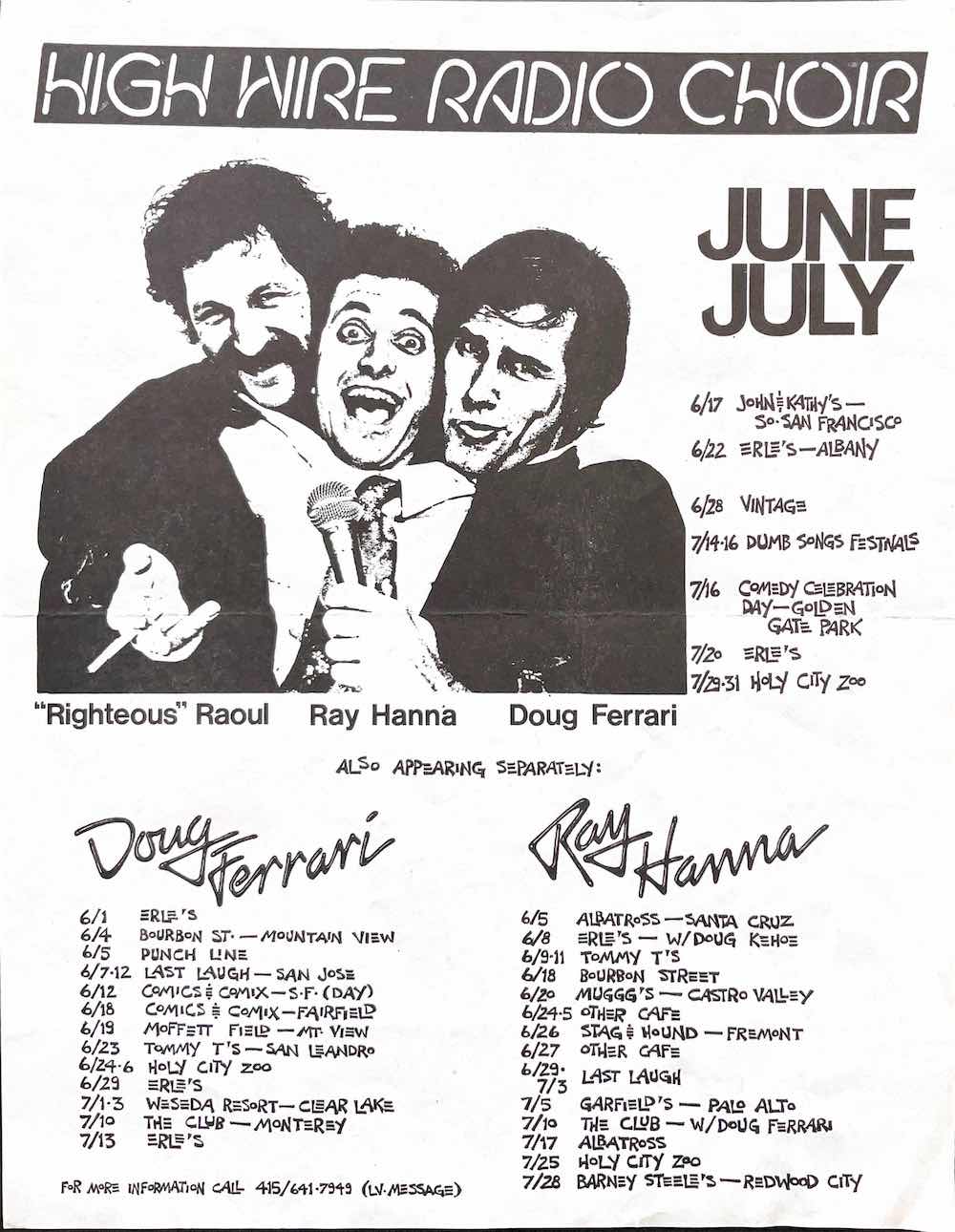
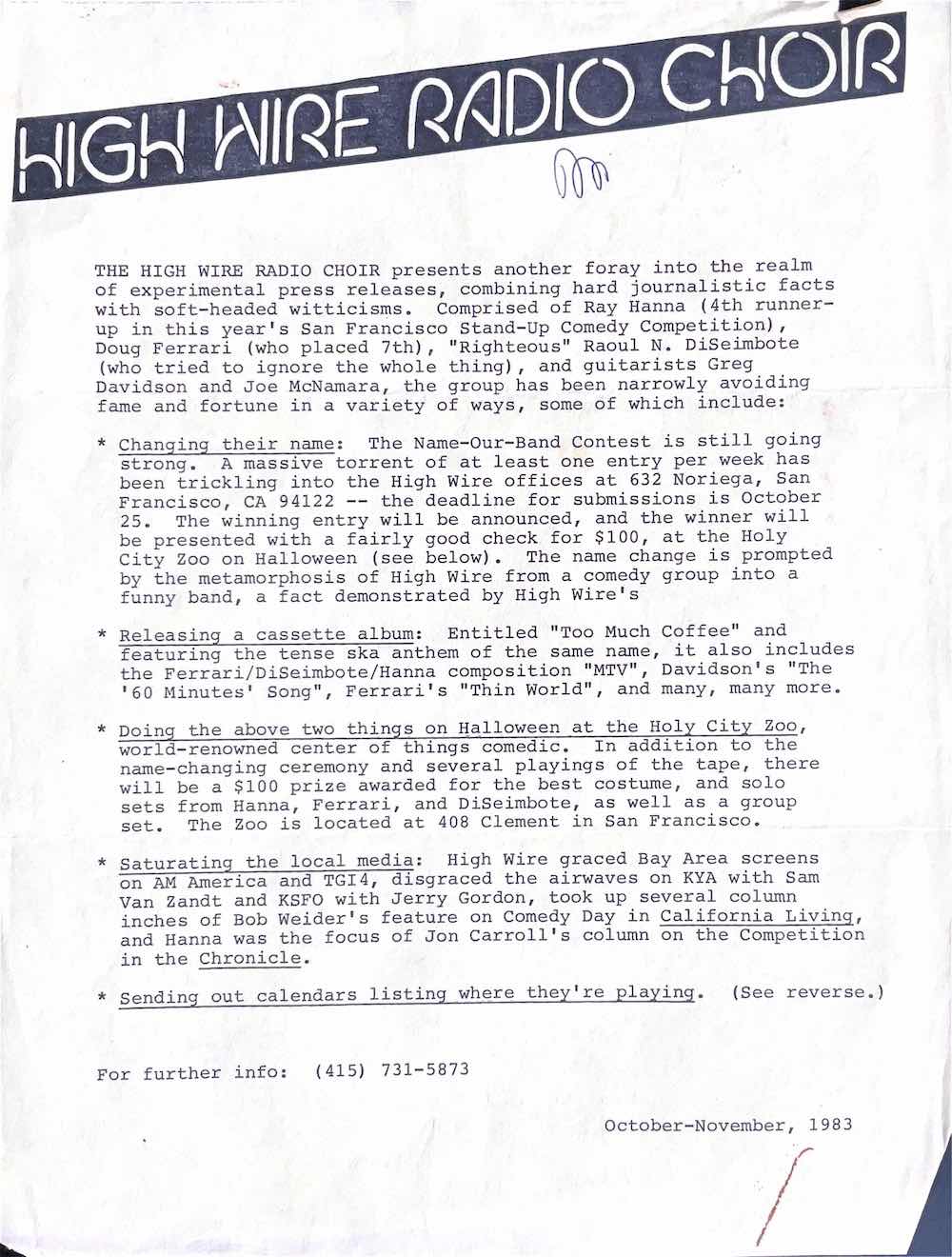
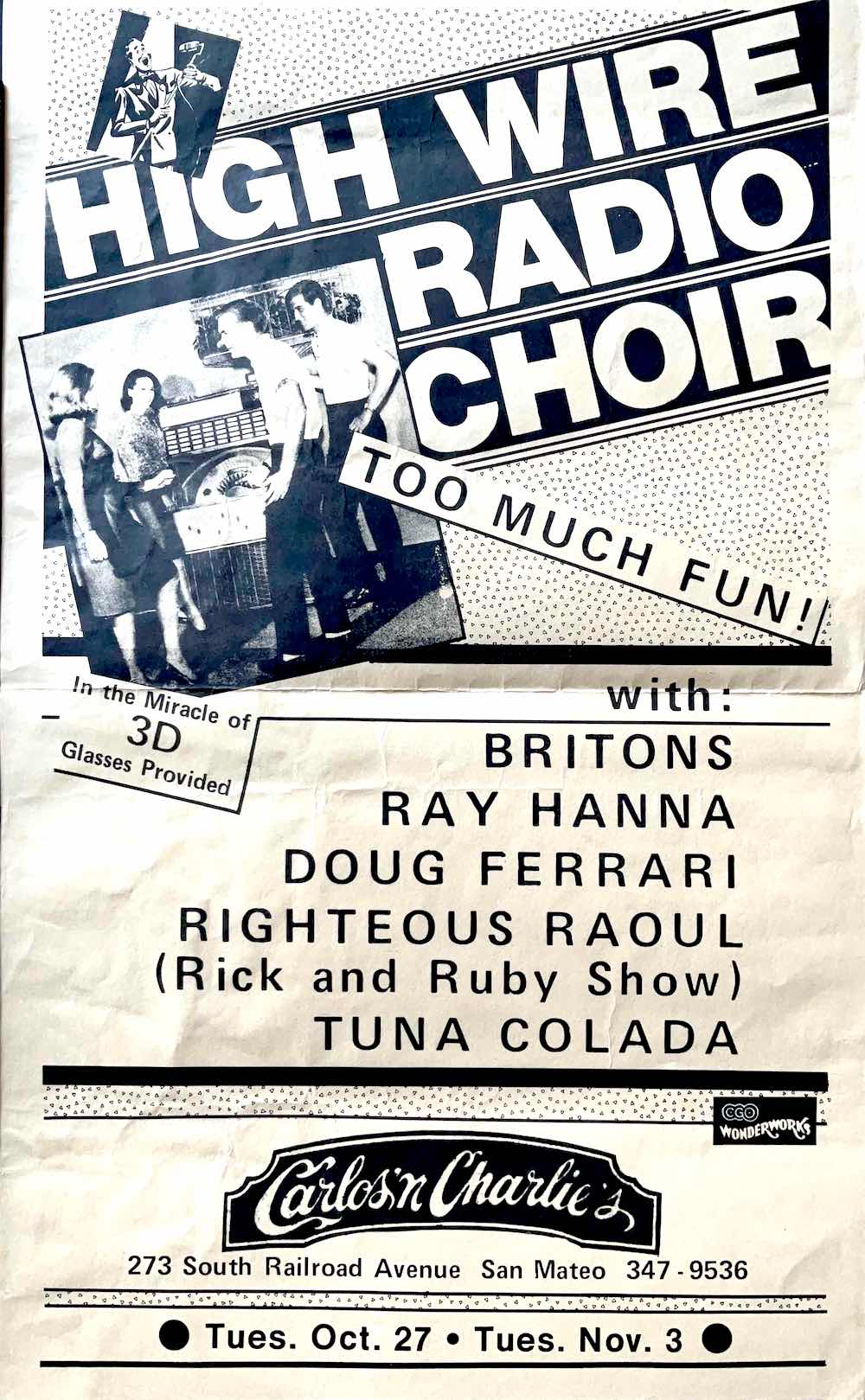
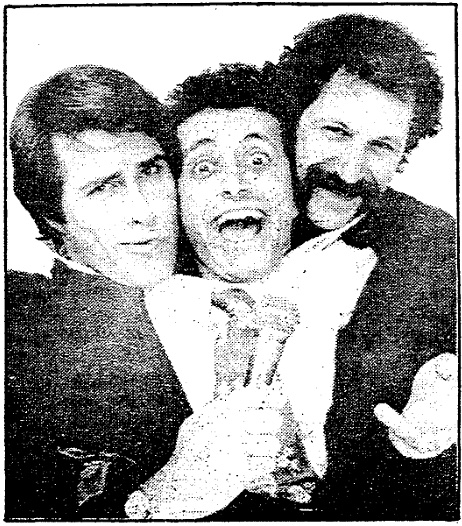
Their hot enterprise right now is Guys From Space - Ray Hanna (keyboards), Doug Ferrari (vocals) and Righteous Raoul (keyboards, formerly with Rick &; Ruby), plus guitar, bass and drums. Doug calls it "a band of comedians who want to be rock-stars," but they take it quite seriously. "It's legit music," Ray insists. "There are laughs and costumes, but the sound is as genuine rock 'n' roll as the Tubes or Dr. Hook." The band is shifting from rock mimicry to original material, from humorous/novelty to offbeat-but-reputable. They've released an eight-song cassette titled "Too Much Coffee," featuring their most ambitious work, "MTV."
~December 1983 · SF Chronicle • Bob Wieder
Large Venues
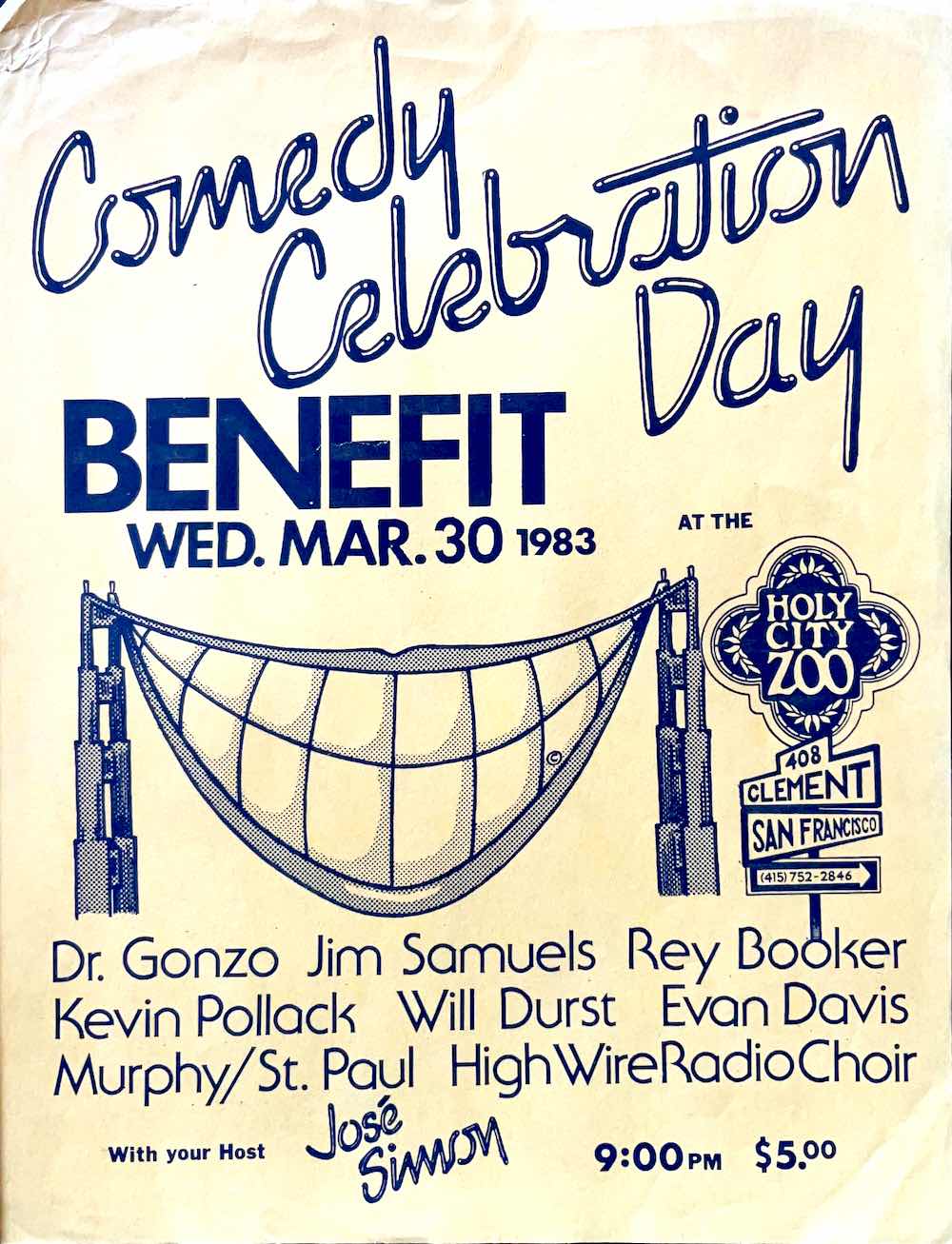
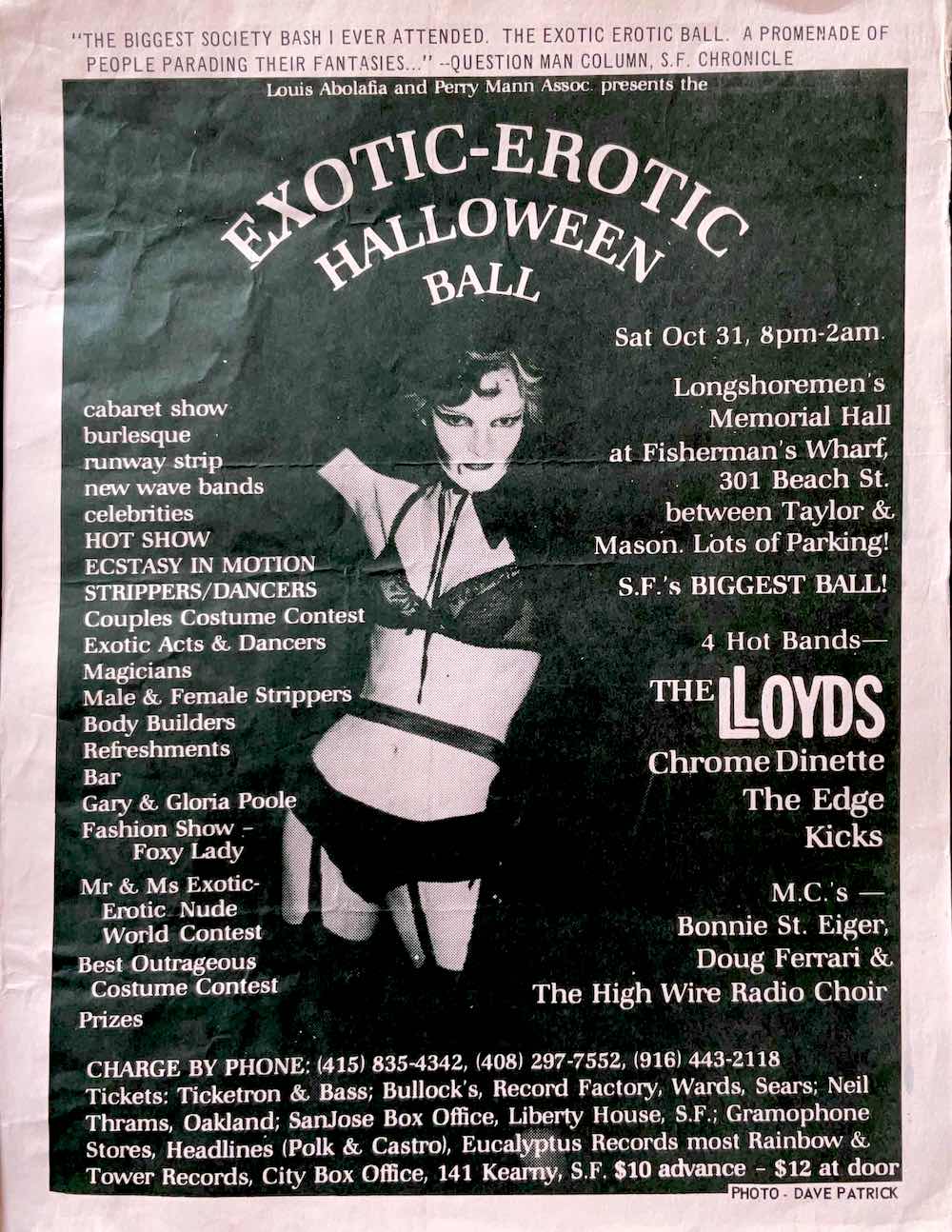
Circa early 1980s - An annual get-together of like-minded costumed party-goers, The High Wire Radio Choir worked as MCs on various stages at the venue.
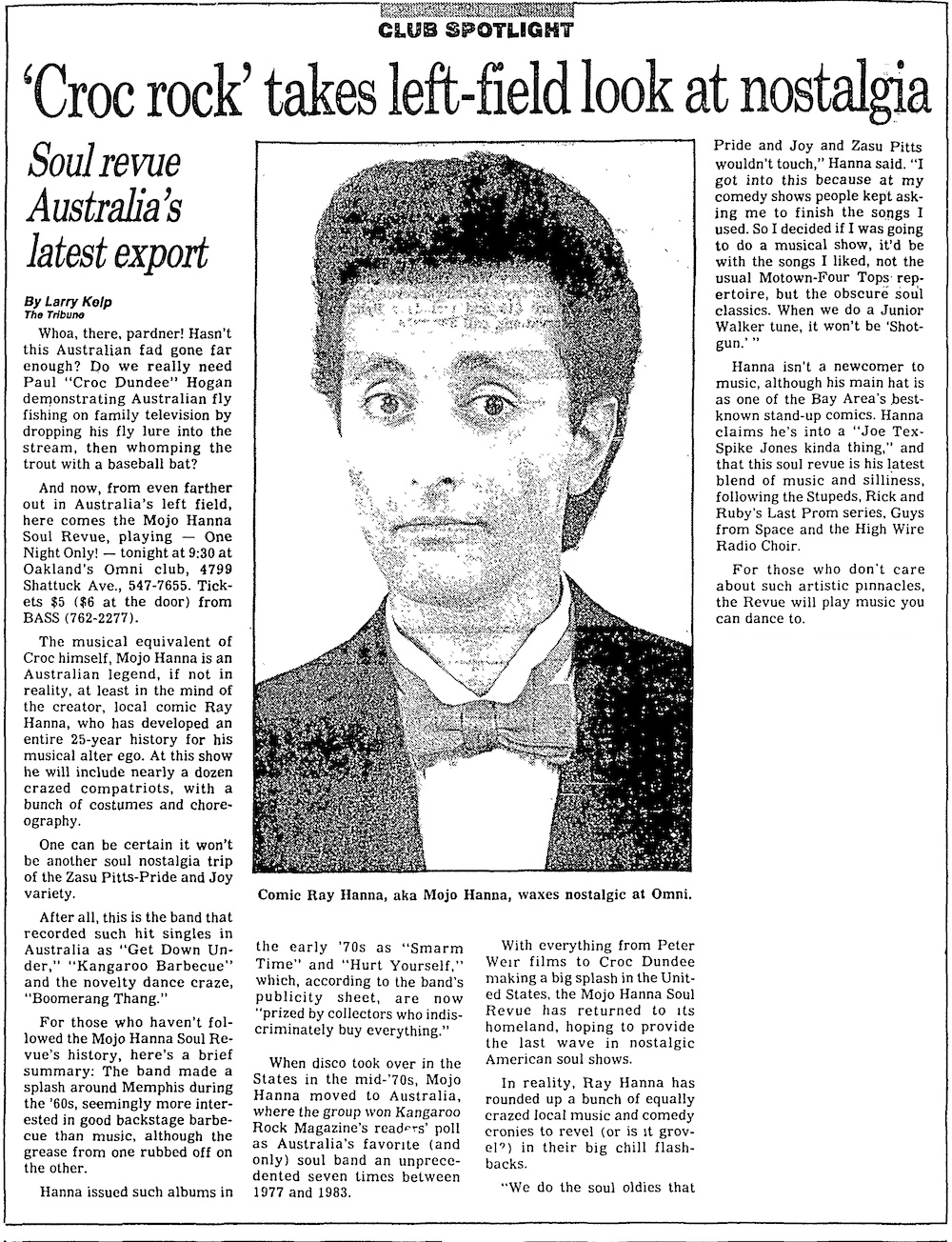
Left-field look at Nostalgia
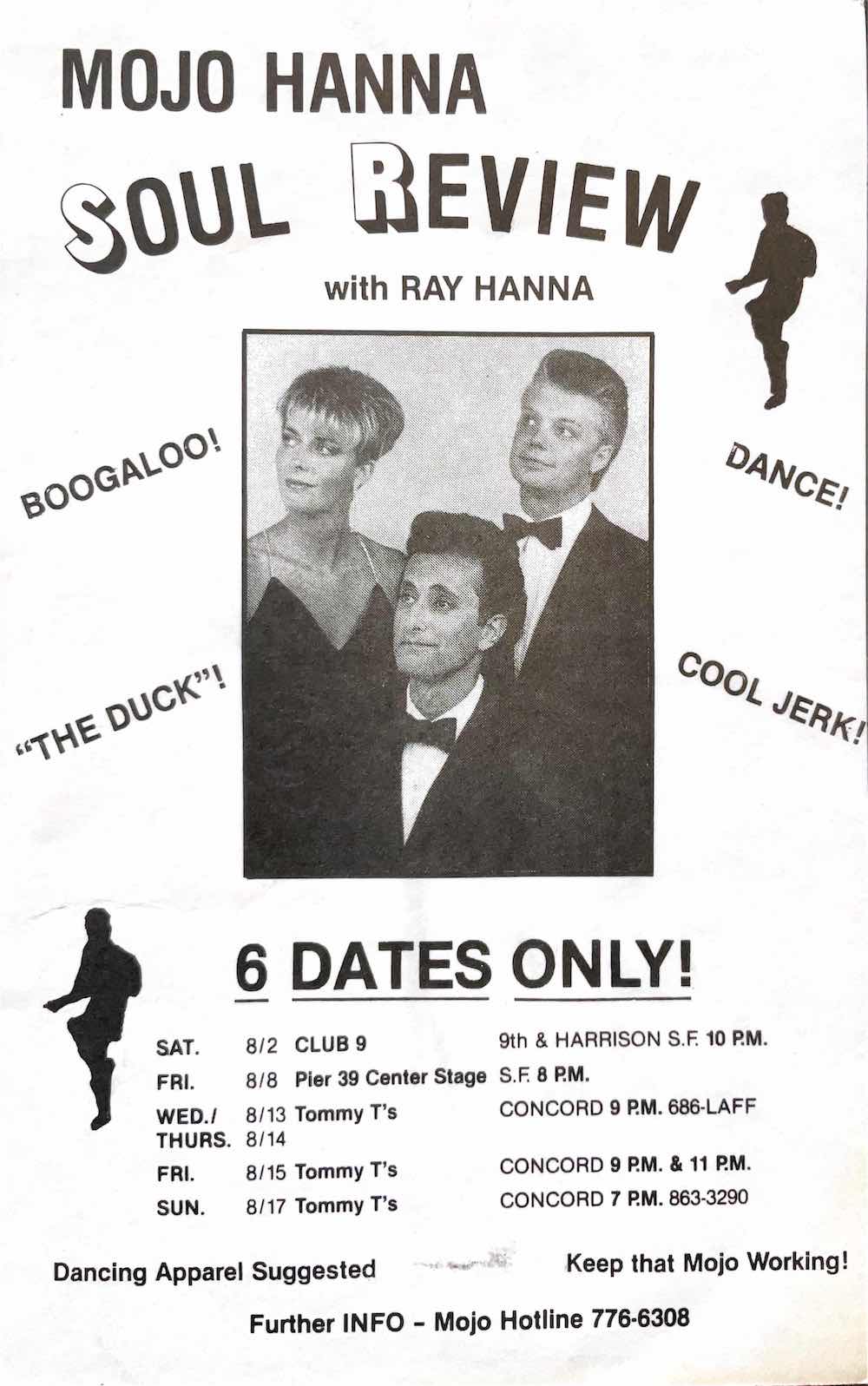
Ray Hanna has rounded up an equally crazed bunch of local musicians and comedy cronies to revel (or is it grovel?) in their big chill flashbacks.
January 1987 • Oakland Tribune • Larry Kelp
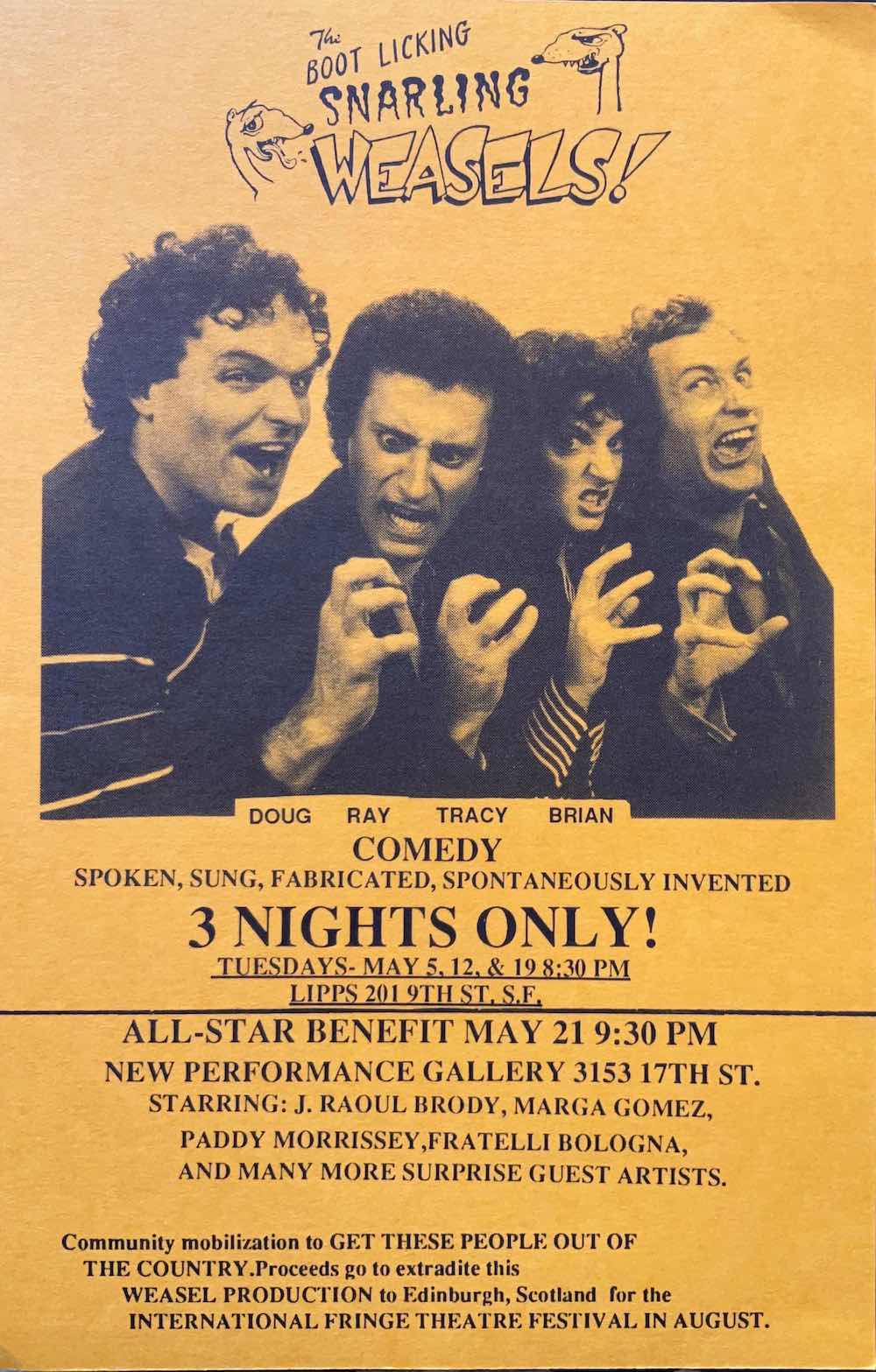
BootLicking Snarling Weasels
A four-month project, a revue that put some talented people together for a one-month run at the Edinburgh Fringe Festival in 1987. Approximately 50 performances altogether, combining stand-up, sketch comedy, improv and edgy cabaret music.
 These are tales of a time come and gone. From 1978 to 1999, I participated in approximately 5000 performances as a stand-up comic. A few thousand of my fellow comedy foot soldiers all over the U.S., Canada and U.K. were doing the same thing. Gigs and more gigs popped up everywhere. The scene was growing up around us and, as sometimes happens, my timing was good. At its peak (about 1989), one could work 52 weeks a year and never do the same venue twice. After my first five years of this activity, it became apparent that my success would not be of the sensational overnight variety. My constant work brought steady progress and a more sophisticated working knowledge of the craft, but not the international acclaim, buzz, or stardom that all performers seek. Traveling brings time for reflection and it occurred to me that even though I hadn’t yet become a star, we comedians were a privileged, fairly exclusive fraternity, carrying on the great tradition of the troubadours, vaudevillians, cabaret performers and other itinerant show-biz gypsies who had come before. I felt grateful to travel the world in this fashion, spinning and sharing yarns, creating a legacy of friendships, all the while, sampling the local hospitality and cuisine. Since none of us knew how long any of this was going to last or where this road would lead, I was sure as Hell going to enjoy the journey. Believe me, I did.
About 1992, something in the stand-up world changed. Americans seemed less willing than they had been in the 1980’s to spend their disposable income in nightclubs. Perhaps it was just the end of another nightclub fad. An image comes to mind of a scrap heap full of karaoke machines and rusting Gilley’s-style mechanical bulls. After willingly stepping away from the stand-up life, I got back into the corporate working world (my last year of part-time touring was 1994) with a promo job at a cable TV network.
Most of the performers I encountered who later became famous would not remember me. In fact, I would have probably progressed further in show business, had I more thoroughly exploited my relationships with the many comics I worked with who went on to become household names. I am not judging those who do or have. As Robert Wuhl once said, “I’ve got friends in this town that I haven’t even used yet.” I’ve never cared about protecting privileged insider relationships with any superstars or their publicists, so you can be assured that these tales are all true. The stories need to be told. Not only can I tell these tales, I may be the only one who can.
A Bubbling Brew
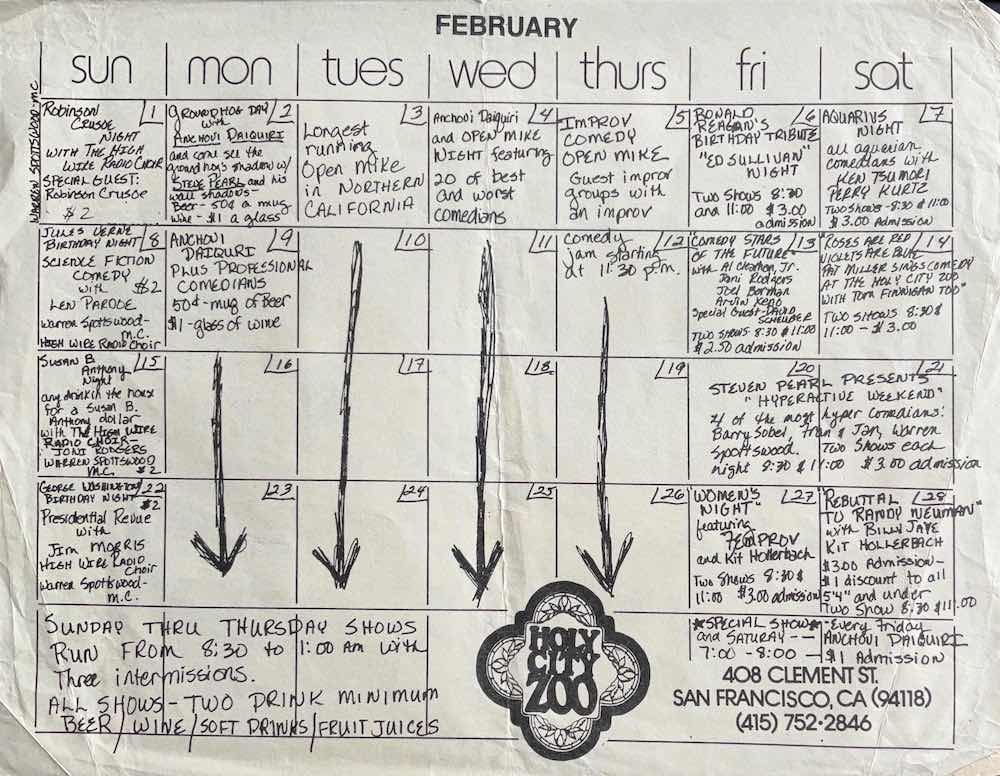
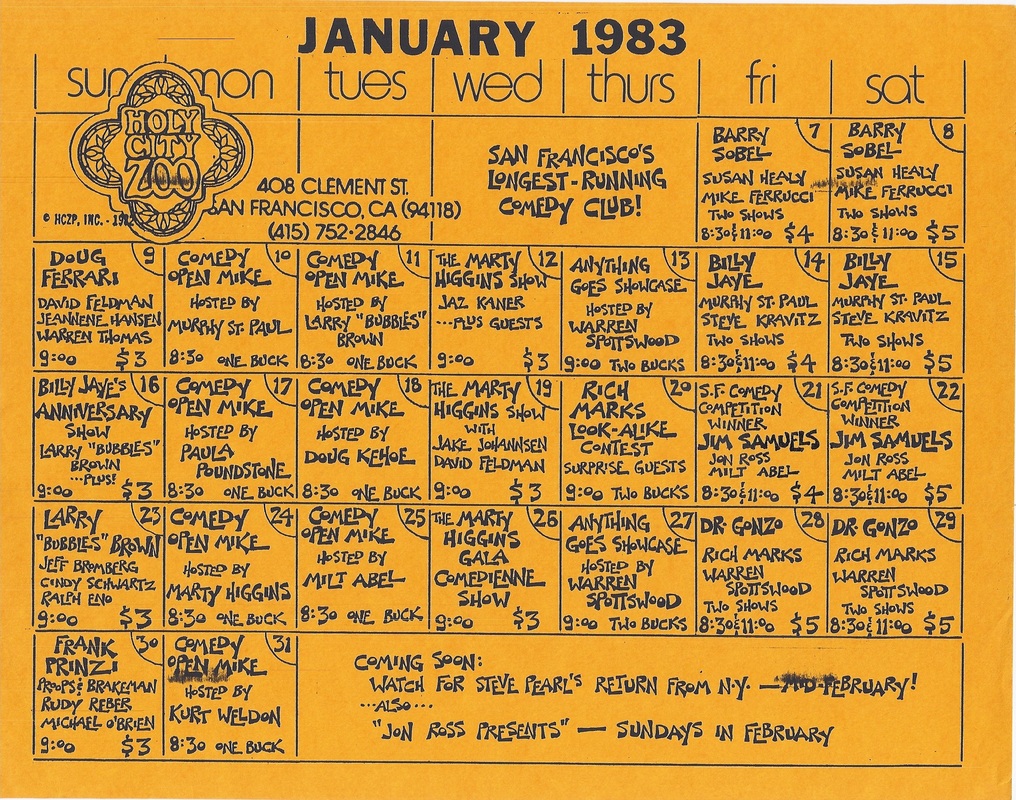
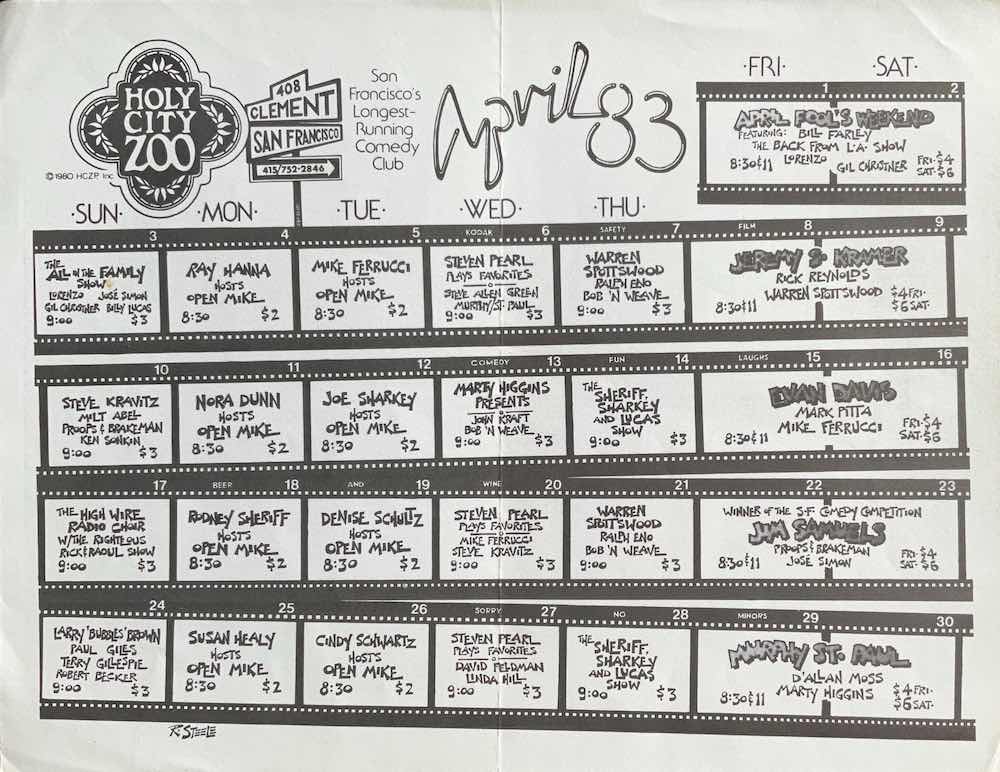
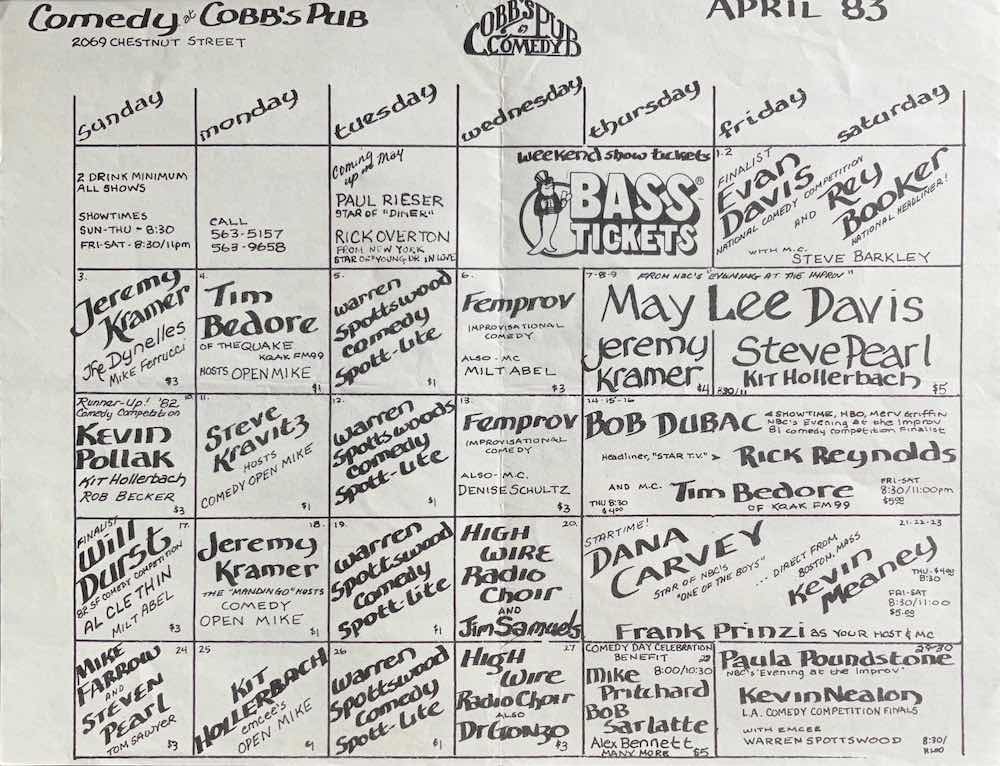
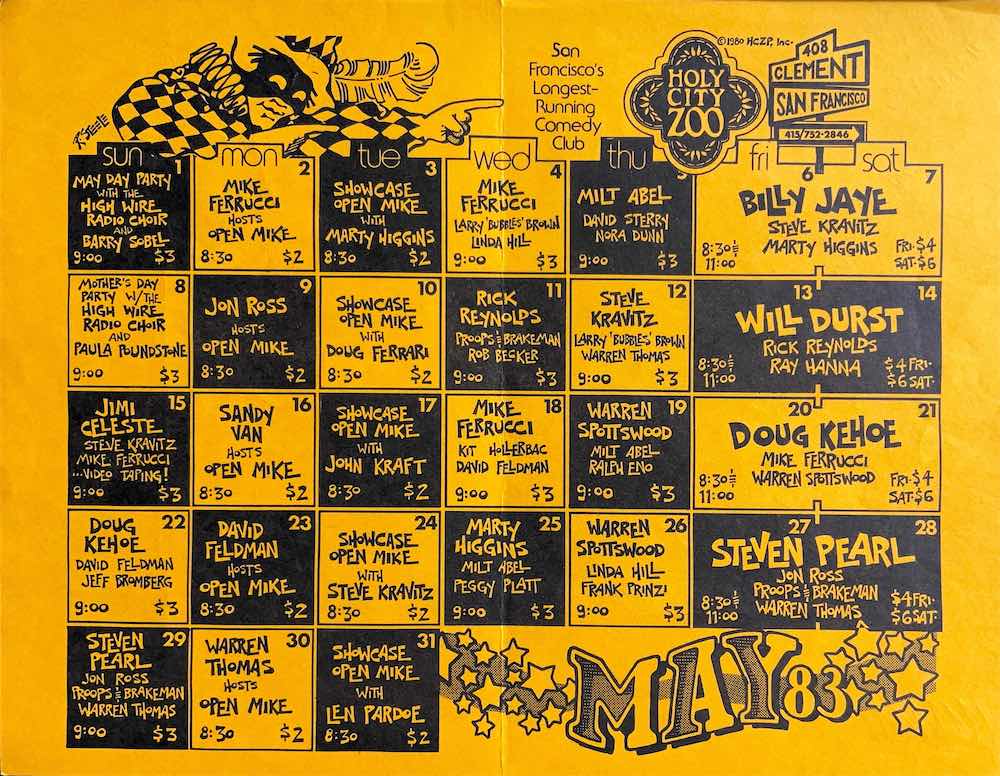
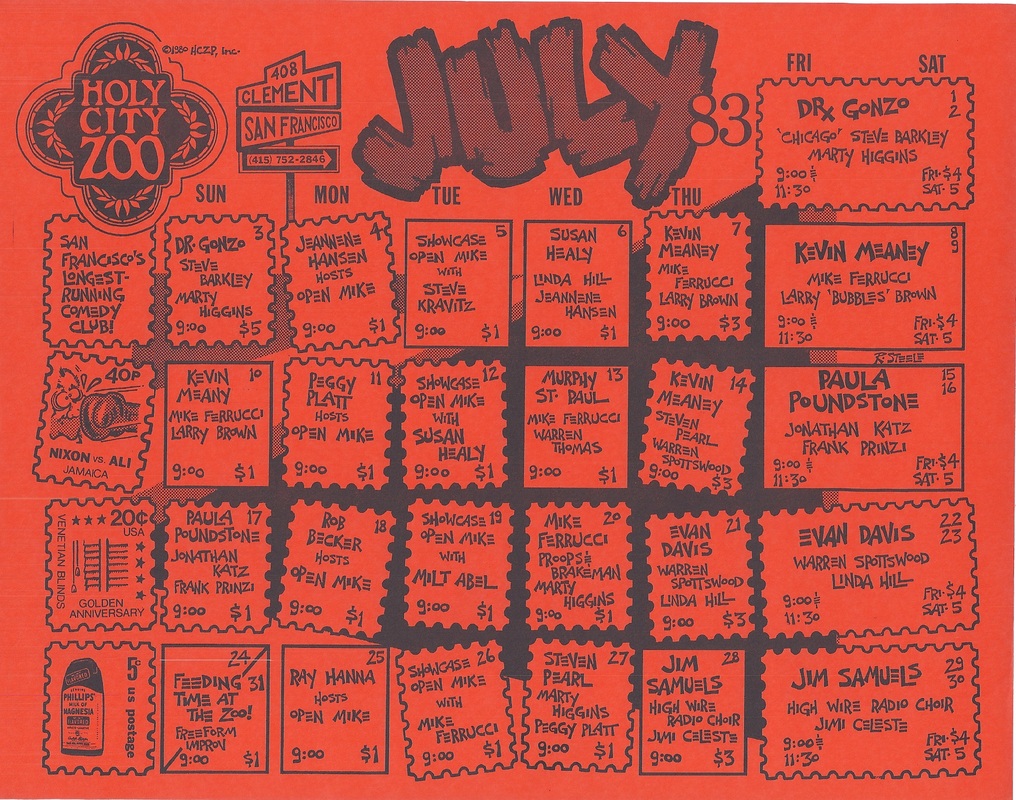
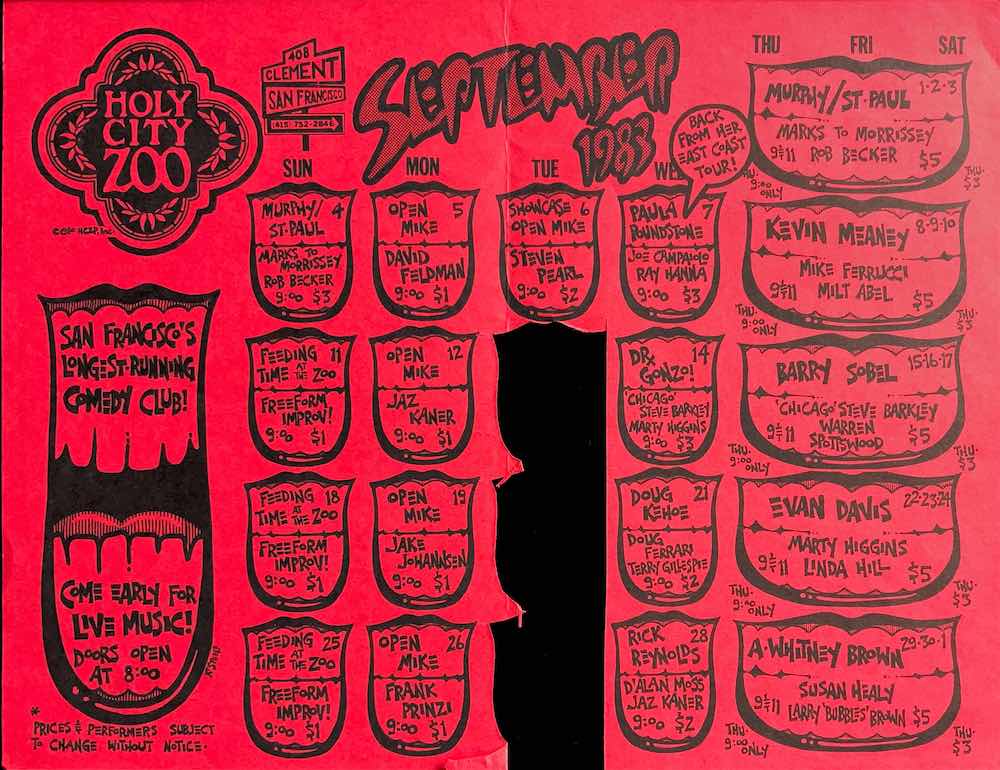
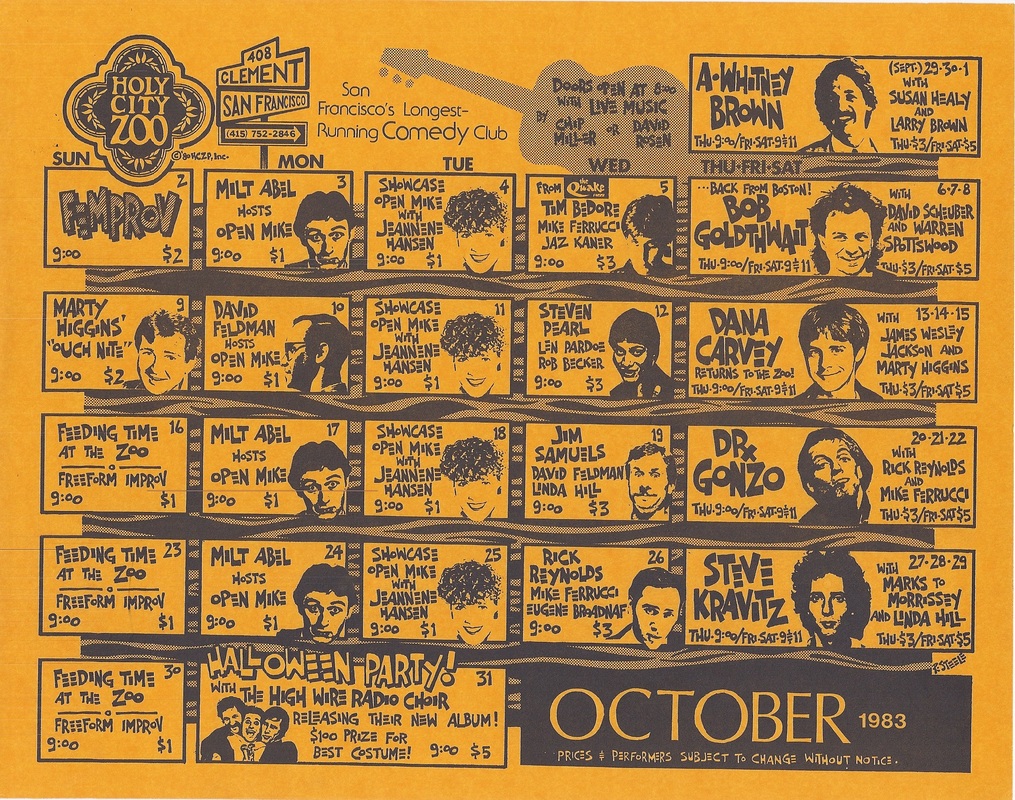
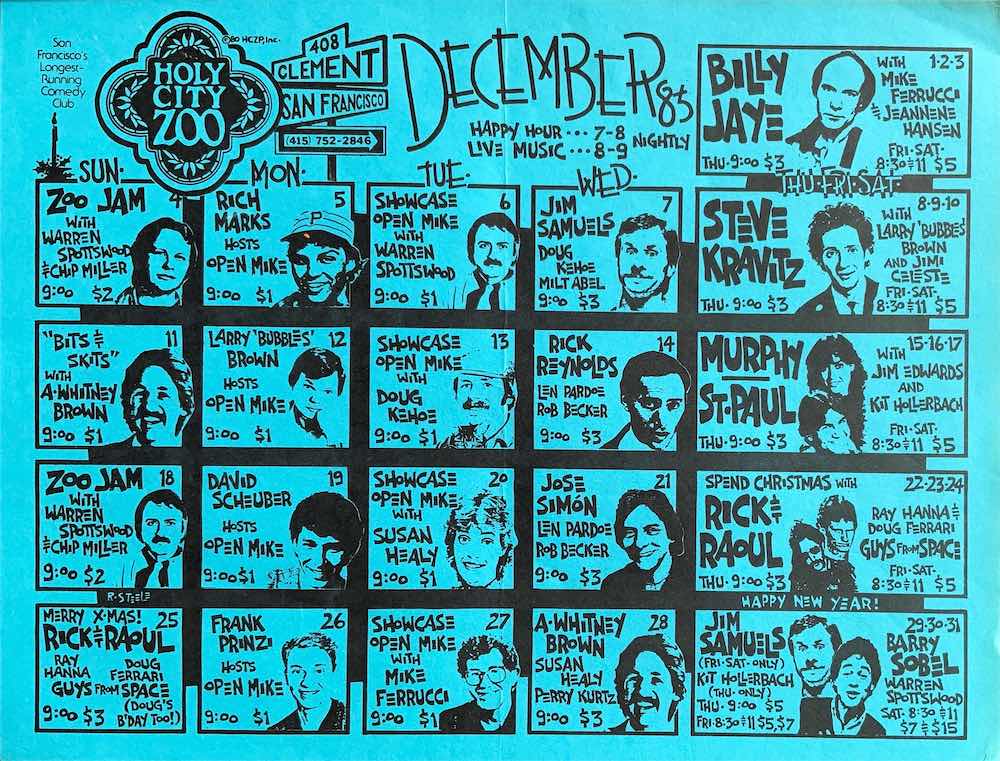
I look back and realize how fortunate I was to be part of the San Francisco comedy scene that grew up around me in the 70's and 80's. It was a unique meeting of many clever people and numerous opportunities to develop their cleverness, a confluence of talent and timing which will never happen again. There were places in San Francisco where you could get stage time with the freedom to fail, opportunities to re-invent yourself and make magic. There were enough paying gigs to serve as measuring sticks and partially subsidize you until you learned what you were doing. At the beginning, I got a lot of M.C. work. I introduced the dancers at Broadway strip clubs. I regularly appeared as an M.C. at our foremost punk rock nightclub, the Mabuhay Gardens, as well as other rock clubs. By doing dozens of open mikes there, I started to get paid M.C. spots at our local comedy hangouts - the Holy City Zoo, the Other Café, Cobb's, the Punchline and dozens of other short-lived venues. Comics from all over the country started gravitating to San Francisco, adding to the bubbling brew of Bay Area natives. On any given night from 1978 to 1984, the comics working out for free or next to nothing might include Dana Carvey, Paula Poundstone, Ellen DeGeneres, Kevin Pollak, Bobcat Goldthwaite, Kevin Meaney, Rob Schneider and of course, Robin Williams.
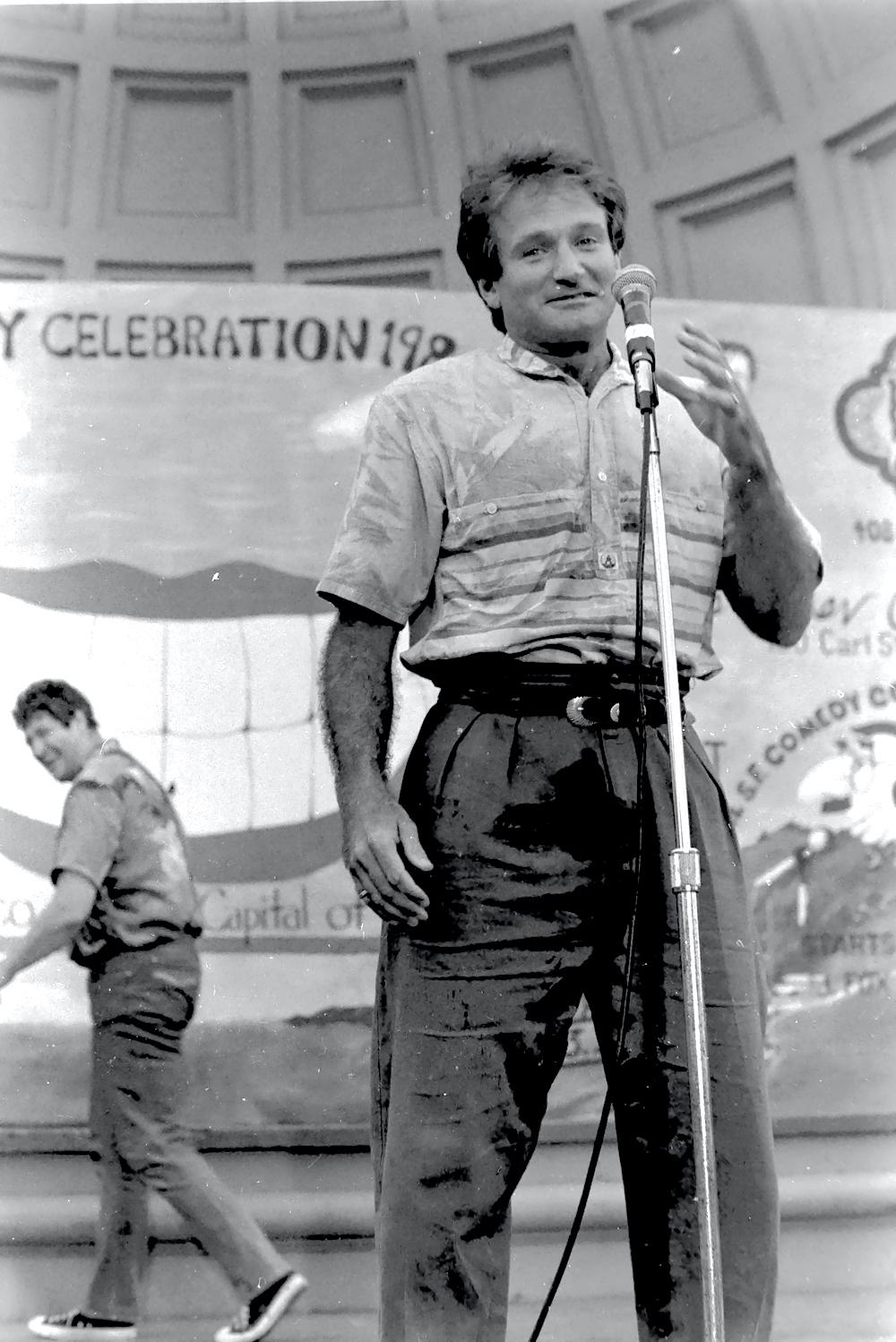
Robin Williams
Robin haunted the clubs in San Francisco and always brought a lot of excitement, partly because he was famous and mostly because he was a fabulous performer. He'd always go at least 45 minutes and you could forget about following him. Basically, he would jump on stage and close the show, improvising extensively, and often with a very funny, gifted comic named Jeremy Kramer. If there was a piano in the house, Robin liked to improvise blues songs with audience suggestions. I accompanied him often enough to know he carried a G harmonica with him. There were dozens of other talented comics who became polished pros during this fertile period - not all of us became household names.
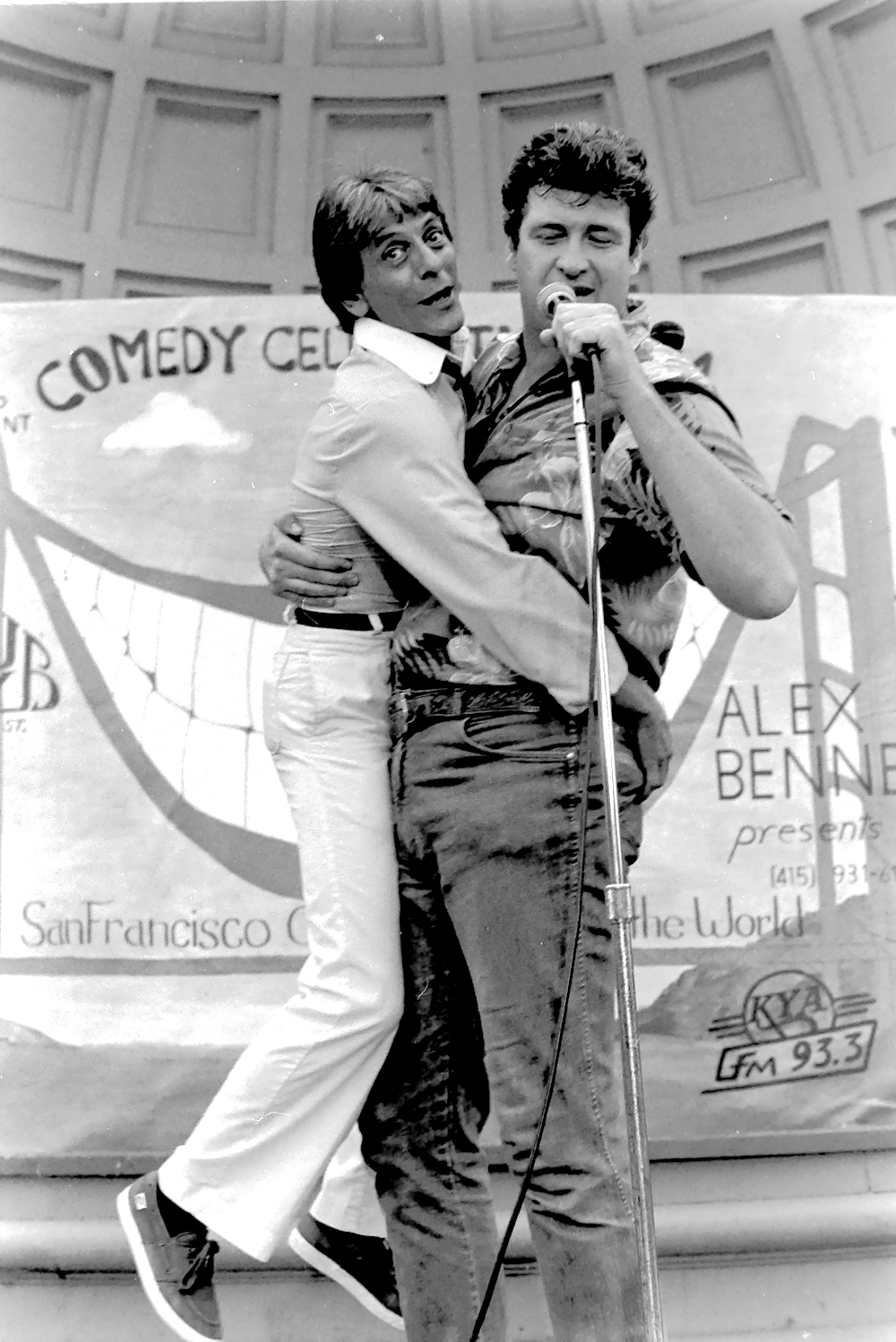
Michael Pritchard
Mike Pritchard is a larger-than-life, force of nature, who has helped countless people in San Francisco over the years, including me. I met Mike in the late 70's when he was a juvenile probation officer. He stood 6'8" and, when he started doing stand-up, he began his act by downing a pitcher of beer and belching loudly. We weren't sure if it was comedy, but he was still impressive on many levels. He had a lot of energy, a lot of characters with funny voices and always tried to inject some social messages into his shows. Until he developed some subtlety, these homilies sometimes appeared to be heavy-handed and even self-serving. No one seemed to mind because he did so much in the community. Mike could and often did pull people (like me) out of dangerous and unhealthy situations. In addition to his official functions in social work, he wouldn't hesitate to intervene if he thought that a comedian was self-destructing. He walked it like he talked it, and yet, he could laugh at his own smarmy, cheeseball tendencies. He also was a fearless improviser and just the sight of him onstage with 5'4" Jeremy Kramer was funny. Mike got a development deal with NBC that didn't do much but keep him off the other networks. Pritchard somehow overcame his development deal and later, created and hosted a show on PBS for kids called The Power Of Choice.
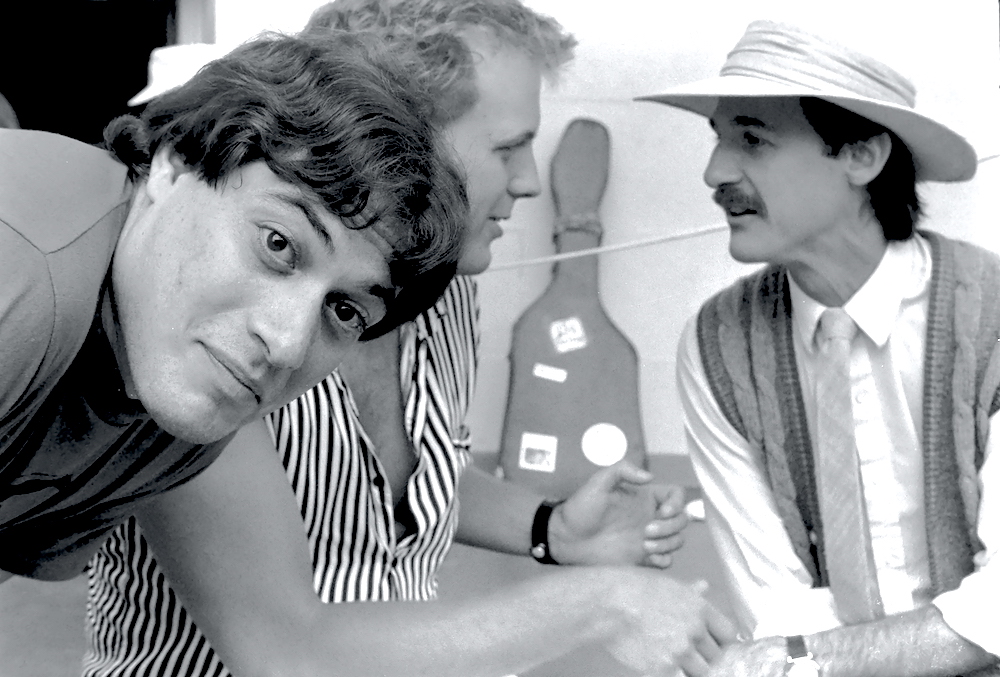
Steven Pearl
Steven Pearl is a maniac and one of the funniest people ever. He came to San Francisco from Long Island. To this day, he makes me laugh so hard that I'm in pain. Pearl is another phenomenal talent who is, inexplicably, not famous. There was a high standard of originality and creativity in the clubs. Who knows why certain people get famous? Some of our fraternity worked enough in Northern California that they eschewed the road and became local legends - "San Francisco Stars" pretty much unknown outside the region. Most of us who developed in San Francisco at this time made some money on the road and eventually re-located to other places. I've since seen dozens of names I remember from back in the day, peppering the credits of films and TV shows.
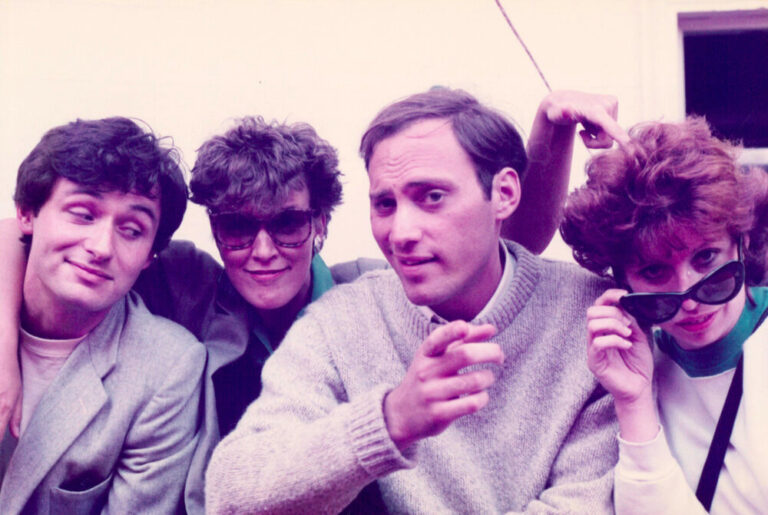
Rick Reynolds
Rick Reynolds came from Portland, Oregon and turned the town on its ear for a while. He had a burning intensity and a probing, fearless intelligence that led him to true greatness and some friction in the business parts of show business. He developed a brilliant one-man show that got him a development deal with NBC. He got a series that didn't stay on the air long. Beware the development deal that pays you a modest chunk upfront and then…what?
Kissing A$$
Not everything was sweetness and light. In every successful scene, there seems to be factionalism between the clubs, bookers, agents, comics and their managers. I've always admired the guys who seemed to float happily above the madness, but sadly, I wasn't one of them. I scuffled along trying to get ahead, but I don't schmooze effectively and I don't kiss ass well either. I say this, not in any attempt to take any moral high ground or exalt my integrity. I'm just bad at it. There's nothing worse than kissing ass and not having it accomplish anything. On other occasions, I apparently kissed the wrong asses. I was kissing local ass, when I could have been kissing nationally significant asses - asses of prominence with global spheres of influence.
I have one lasting memory of San Francisco comedy that is priceless and represents the best part of what we once had there. For many years, there was a comedy competition in San Francisco that took a month to complete and involved about a dozen venues in the Bay Area. One of these was the auditorium at the Marin Civic Center, designed by Frank Lloyd Wright. It’s a 2000-seat, prestige concert hall, the likes of which we comics seldom see unless we’re buying a symphony ticket. In 1983, I was one of 10 semi-finalists performing in that hall. During the competition, I always brought a football with me, and after my soundcheck, I’d throw the ball with my friend Bobby. This ritual succeeded in loosening me up physically and blowing off a lot of stress. Even though he made more money in a month as a stock options trader than all 10 performers combined would make that year, Bobby roadied for me the entire month.
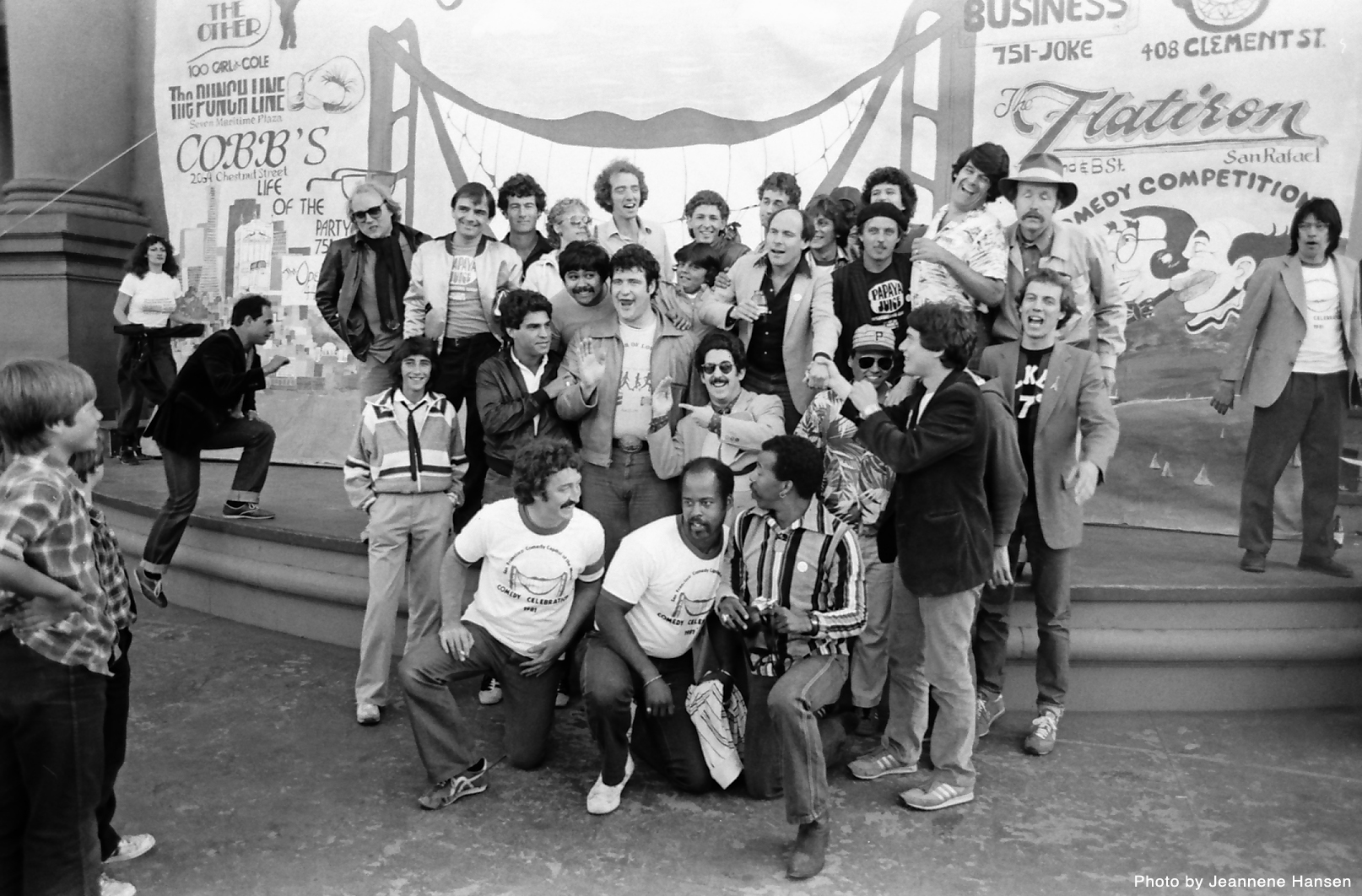
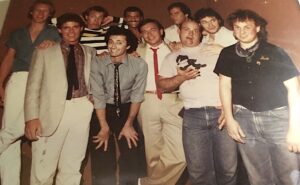 L-R: Evan Davis, David Wood, Dr. Gonzo, Ray Hanna, D’Alan Moss, Will Durst, Doug Ferrari, Monty Hoffman, Leland Brown, Bobcat Goldthwaite • Photo Credit: Randy Bachman •
After the ten contestants completed their sets, the judges would tally their scores and this night, the late Jim Samuels was doing the compilation set – a set of indeterminate length that allowed the judges to do whatever they do. While Jim did his time in front of the curtain, a full five-on-five football game was going on behind the curtain. Occasionally, the ball would hit the curtain and we’d hear a small ripple from the audience. Earlier in the compilation set, Bobby and I had started flinging the ball around on this huge stage, and pretty soon everyone joined in – Bobcat Goldthwaite, Doug Ferrari (who had probably never handled a football), Will Durst in a suit, D’Alan Moss in a tuxedo. This was a sight. For just a few moments, all the competitive crap was forgotten, and it was just some guys running around being silly.
David Allen made me his house M.C., and over a two year period, I got a crash course in traditional showbiz in the time-honored, classy supper-club style. David knew a lot about comedy and had a huge heart but a slightly smaller head for business. His last 6 years or so were a constant battle to stay ahead of creditors and keep his liquor license. I remember one benefit for the Boarding House for which I gladly bought a ticket. The lineup was Steve Martin, Martin Mull, Billy Crystal, Loudon Wainwright III, Melissa Manchester, Jimmy Buffett, and at the bottom of the bill, a very young Robin Williams. They were all headliners by then, but all of them had been helped early on in their careers with prestige bookings at the Boarding House. I was one of the last comics blessed by the generosity and good counsel of David Allen. By the end of my two-year cycle at the Boarding House, my polish was starting to show and I was getting booked all over town, but David was dead. He had always been a huge man and complications from gout brought about his premature demise in 1983.